Emergency Dentistry
Dental Emergency or Not? How to Read the Urgency of a Tooth Problem
Written by: The Caddens Dental Bar Team · Updated August 2026 · 9 min read
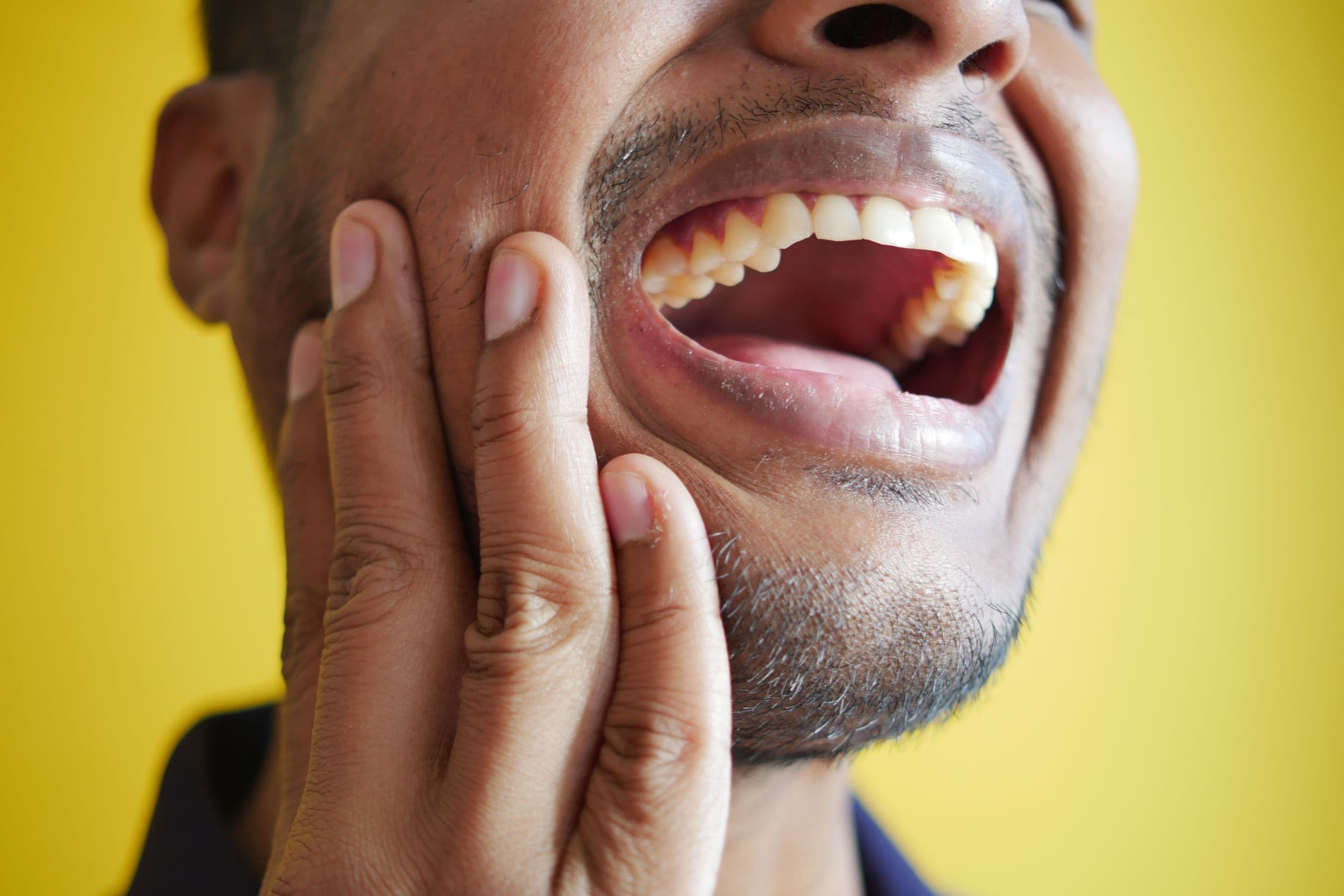
A tooth problem that appears suddenly is hard to put in perspective when you're in the middle of it.
Pain is not a reliable guide to seriousness, and neither is how dramatic something looks — a knocked-out tooth is an emergency even if it doesn't hurt much; a lost filling often isn't, even if it looks alarming.
This guide walks through what actually needs same-day care, when to go straight to hospital instead, and what to do while you're waiting to be seen.
Key Takeaways
- +If breathing, swallowing or speaking is affected, or there is heavy uncontrolled bleeding, go to hospital or call 000 — not a dental clinic
- +A knocked-out adult tooth is one of the most time-sensitive dental emergencies: ideally assessed within 30 minutes, though Healthdirect notes a chance of saving the tooth up to two hours after injury
- +Severe or worsening pain, significant facial swelling, suspected infection and uncontrolled bleeding all need prompt dental assessment — don't wait to see if they improve
- +A small painless chip, mild stable sensitivity or a lost restoration without pain is not a dental emergency, but should still be assessed before normal chewing makes it worse
Hospital or Emergency Dentist — Answer This First
Before anything else: if the situation involves difficulty breathing, swallowing or speaking, or swelling that's spreading toward the throat or neck, don't call a dentist — call 000 or get to the nearest hospital emergency department.
These are medical emergencies that are beyond what any dental clinic can safely manage.
Most tooth problems — even severe, painful ones — belong at an emergency dentist, not a hospital. But the airway question always comes first.
Go to Hospital If:
Breathing, swallowing or speaking is affected. Swelling has spread under the tongue, into the neck or around the eye socket. There is heavy uncontrolled bleeding. You have sustained major facial trauma or a suspected jaw injury. Call 000 if any of these apply — don't wait.
Go to an Emergency Dentist If:
You have severe or worsening tooth pain. A tooth has been knocked out. You have significant facial or jaw swelling that is not affecting your airway. You suspect a dental abscess or infection. A tooth is badly broken, loose or displaced after trauma. Bleeding from the mouth has not stopped after 10 minutes of firm pressure.
The Most Time-Sensitive Situation: A Knocked-Out Adult Tooth
A knocked-out adult tooth is one of the few dental emergencies where the clock is genuinely running from the moment it happens.
According to Healthdirect, care should ideally begin within 30 minutes, and there may still be a chance of saving the tooth up to two hours after the injury — but the sooner you get there, the better the odds.
- +Pick up the tooth by the crown — the visible white part — not the root
- +If it's dirty, rinse it briefly with clean water; don't scrub, scrape or soak it
- +If the person is conscious, cooperative and it can be done safely, the tooth can be gently placed back into the socket
- +Otherwise, keep it moist: submerged in a small cup of milk, or stored between the cheek and gum
- +A knocked-out baby tooth should NOT be reinserted — putting it back risks damaging the developing permanent tooth underneath
- +Call the dental clinic while you're on the way so they're ready for you on arrival
Pain, Swelling and Suspected Infection
Tooth pain exists on a spectrum, and the part of it that needs urgent attention is when it's severe, worsening, or accompanied by other signs.
Swelling alongside tooth pain is one of the more reliable warning flags — it often points to infection that won't settle on its own.

- +Throbbing pain that has been building over days — especially if it's disturbing sleep — needs dental assessment soon rather than later
- +Healthdirect recommends seeing a dentist as soon as possible when a toothache has lasted more than two days or isn't improving with pain relief
- +Swelling in the cheek, jaw or face alongside tooth pain often indicates an infection that needs treating — don't wait to see if it resolves
- +Fever, a persistent bad taste or sensitivity so extreme you can't eat or drink all add urgency
- +Pain easing off doesn't necessarily mean the infection is gone — the nerve can stop responding while bacteria continue spreading
Broken and Displaced Teeth: Reading the Urgency
The urgency of a broken tooth depends on how badly it's broken and what symptoms come with it.
- +A small, painless chip with no sensitivity: not an emergency, but worth a booking before a rough edge wears down or chips further
- +A crack that's causing pain or sensitivity: needs same-day assessment — cracks can deepen under normal chewing pressure
- +A tooth that's loose, tilted or partially knocked out after trauma: see an emergency dentist the same day
- +Keep any fragments — they can sometimes be reattached. Store them in milk or water, not in dry tissue
- +A cold compress held against the outside of the cheek (never ice direct on the skin) can help with swelling while you travel to the clinic
What Can Realistically Wait for a Regular Appointment
Not every urgent-feeling dental problem is a same-day emergency.
- +A small painless chip with no temperature sensitivity: book a regular appointment — it shouldn't wait months, but it doesn't need today
- +A lost filling or crown with no significant pain: the exposed area may become sensitive, so book soon — but it's not a same-day situation unless it's sharp or painful
- +Mild, stable tooth sensitivity: worth mentioning at your next check-up
- +One exception: always have trauma assessed even if symptoms seem minor — cracks and root damage aren't always visible, and a tooth that feels fine after an impact can still be affected below the surface
What to Do While You Wait
First aid buys time and comfort — it doesn't treat the underlying problem.
For Toothache and Pain
Rinse the mouth gently with water and carefully floss between the affected teeth if you think trapped food might be contributing. Over-the-counter pain relief — ibuprofen or paracetamol taken as directed — can take the edge off; a pharmacist can advise on what's appropriate for you. Don't place any tablet, aspirin or topical product directly on the gum or tooth — contact burns to soft tissue are a real risk. A salt water rinse may temporarily soothe mild irritation but won't treat infection.
For Swelling
Wrap an ice pack or bag of frozen peas in a clean cloth and hold it against the outside of the cheek for 15-minute intervals. Never put ice directly against the skin.
For Bleeding
Press a folded piece of clean gauze or cloth firmly against the wound and hold it there. Resist the urge to keep lifting it to check — each time you do, you interrupt clot formation. Healthdirect advises that bleeding from mouth and tongue cuts should stop within roughly 10 minutes of sustained pressure. If it hasn't by then, seek urgent medical care. Call 000 immediately if heavy bleeding is affecting the throat or making it hard to breathe.
What to Expect at an Emergency Dental Appointment
The visit starts with an assessment of symptoms and history, followed by an examination of the tooth and surrounding tissues.
X-rays are taken when there's damage that can't be assessed from outside.
The dentist's first aim is to identify the cause, manage pain where possible and decide whether immediate treatment or stabilisation is the right first step.
At The Caddens Dental Bar, we offer same-day appointments for urgent dental concerns — call and describe your symptoms so our team can advise on availability and what to do before you arrive.
How to Read the Urgency Level
Use this as a rough guide — symptoms can change quickly, and what looks stable can escalate. When in doubt, call the clinic and describe what's happening.
| Situation | Urgency | First action |
|---|---|---|
| Difficulty breathing, swallowing or speaking | Medical emergency | Call 000 or go to hospital immediately |
| Swelling spreading to neck or under the tongue | Medical emergency | Call 000 or go to hospital immediately |
| Heavy uncontrolled bleeding | Medical emergency | Apply pressure and call 000 or go to hospital |
| Knocked-out adult tooth | Dental emergency — time-sensitive | Handle correctly, keep moist, call clinic, get there within 30 minutes if possible |
| Severe or rapidly worsening pain | Urgent dental care | Call emergency dentist for same-day assessment |
| Significant facial swelling with tooth pain | Urgent dental care | Same-day dental assessment; go to hospital if airway is affected |
| Badly broken or displaced tooth after trauma | Urgent dental care | Same-day dental assessment |
| Small painless chip, lost filling without pain | Non-urgent | Book a regular appointment — don't delay months, but not today |
What to Do Right Now If You Think It's a Dental Emergency
A quick checklist before you call or head to the clinic.
- +Assess the airway question first — if breathing or swallowing is affected at all, go to hospital, not a dental clinic
- +If a tooth has been knocked out, handle it by the crown, keep it moist in milk or saliva, and get moving
- +Apply firm, steady pressure to any bleeding wound with clean gauze or cloth — resist the urge to check every few seconds
- +Take over-the-counter pain relief as directed if pain is severe — ibuprofen is often more effective for dental pain than paracetamol alone; you can take both together if needed
- +Do not place any painkiller tablet or aspirin directly on the tooth or gum
- +Call the clinic and describe your symptoms — we can advise on urgency, what to do before you arrive and what appointment options are available
- +Bring your Medicare card and health fund details if you have them handy
Common Questions
Related
Please note: This article is general information only and is not a substitute for professional dental or medical assessment. If breathing, swallowing or speaking is affected at all, seek emergency medical care immediately.