Preventive Dentistry
What Really Happens at a Dental Check-Up and Clean
Written by: The Caddens Dental Bar Team · Updated August 2026 · 8 min read
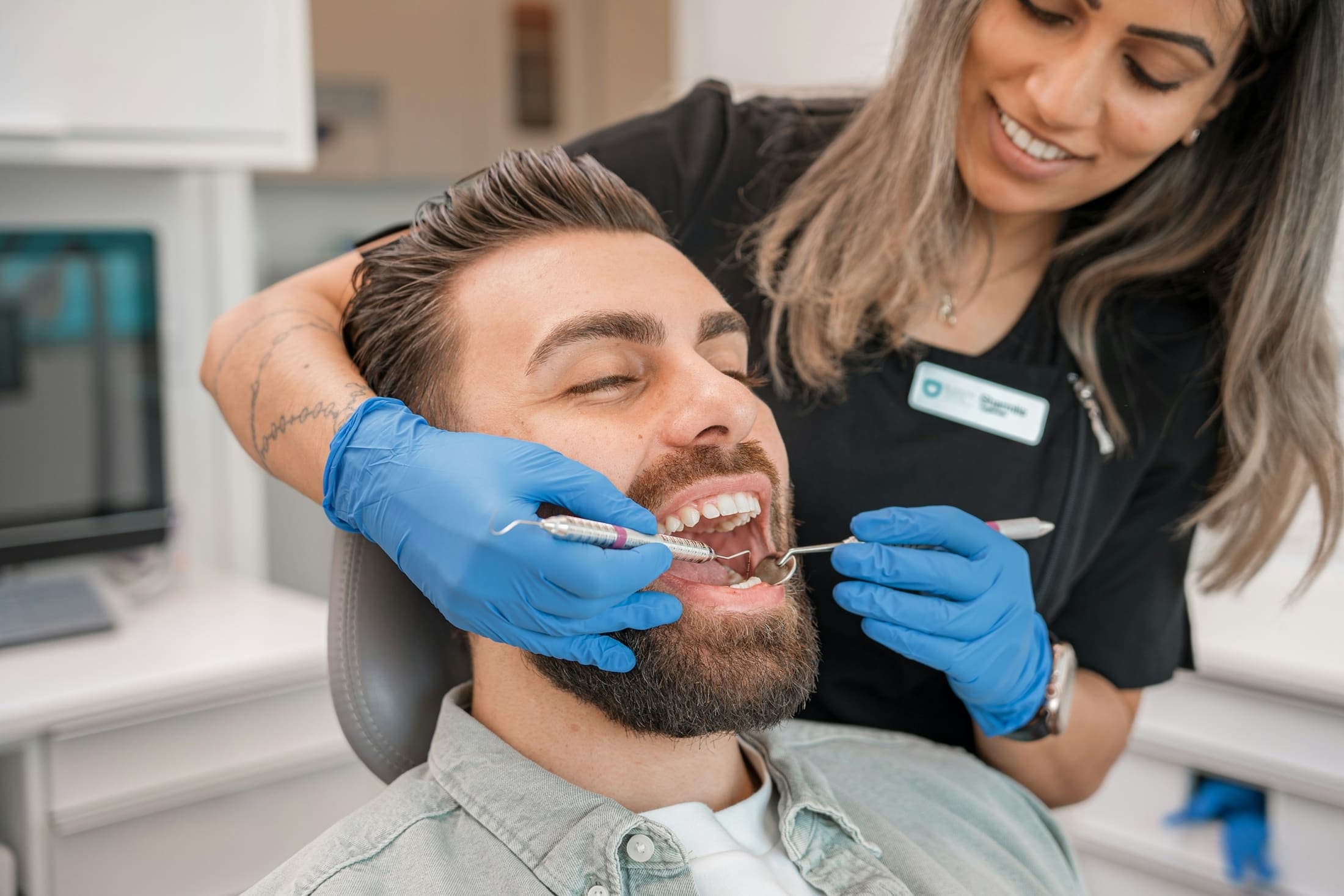
A dental check-up and clean is the single most effective habit for keeping small problems small. Once or twice a year, a dentist looks closely at everything a bathroom mirror can't show you, and a hygienist clears away the plaque and tartar your toothbrush leaves behind.
Here's what actually happens in the chair, how often you genuinely need to come in, and roughly what it costs in Australia — so you know exactly what to expect before you book.
Key Takeaways
- +A standard check-up and clean covers an exam, a professional scale and polish, and X-rays only when they're clinically needed
- +Most dentists recommend coming in every 6 to 12 months, though your own interval depends on your oral health history
- +ADA fee survey data (reported via CHOICE) puts the average check-up and clean around $219, ranging $162–$309 — ours is a flat $129
- +HICAPS lets most health funds process your rebate on the spot, though your exact gap always depends on your policy
What Actually Happens In The Chair
A check-up and clean is really two appointments in one. First, your dentist examines your teeth, gums and mouth for anything that shouldn't be there. Then, depending on the practice, a dentist or hygienist gives your teeth a professional clean.
Spotting an issue early usually means a simpler, less costly fix than waiting until it hurts. That early catch is the entire point of going regularly, even when nothing feels wrong.
The Examination
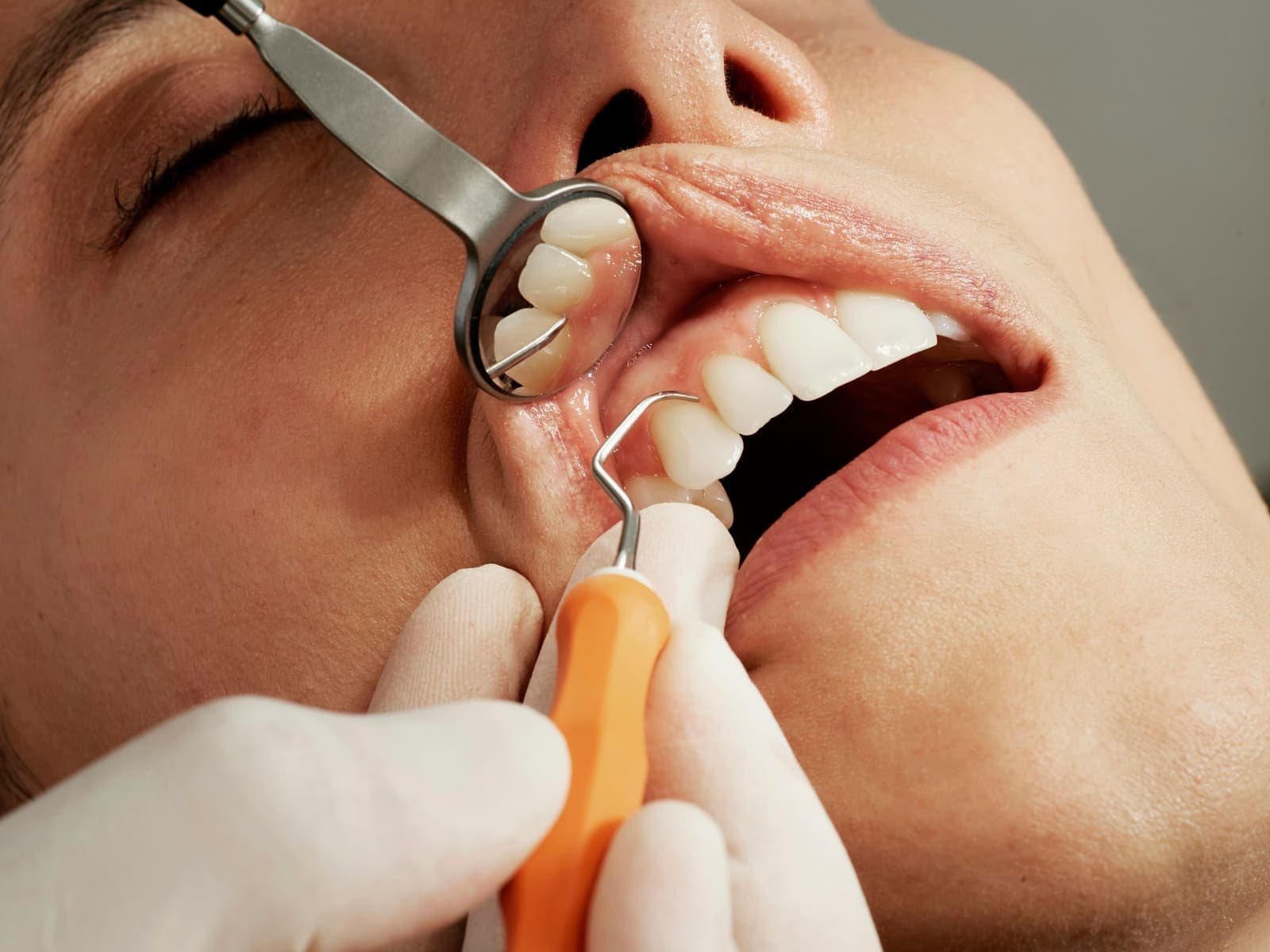
Your dentist works tooth by tooth, checking for decay, cracks and wear, then looks closely at your gums for early signs of inflammation. Your bite, jaw joints, and the soft tissue in your mouth get checked too — they'll flag anything that needs a closer look. It's usually quick and comfortable, though let your dentist know beforehand if your gums or teeth tend to be sensitive.
The Scale and Polish
This is the part most people picture when they hear "teeth cleaning." Using an ultrasonic scaler and hand tools, your dentist or hygienist lifts plaque and hardened tartar from around and between your teeth — including the spots your toothbrush never quite reaches. A gritty polishing paste follows to smooth the surface and lift staining from coffee, tea or red wine, and a floss finishes the job.
X-Rays, Only When They're Needed
X-rays aren't part of every visit. Your dentist will recommend them when there's a clinical reason to — based on your symptoms, what they find during the exam, your age and decay risk, and how long it's been since your last set.
Fluoride and a Plan for Home
If it suits your oral health, your dentist may finish with a fluoride treatment, plus a few pointers tailored to you — brushing technique, flossing, and anything in your diet that's working against your teeth.
Small Enough to Miss, Easy Enough to Fix
The whole reason regular check-ups matter comes down to timing. A cavity caught early might need nothing more than a small filling. Left alone for a year or two, that same cavity can mean a root canal, or worse. Gum disease follows the same pattern — gingivitis is easily reversed with a clean and better home care, but ignored for long enough it can start affecting the bone that holds your teeth in place.
None of this requires you to notice a problem yourself. That's what the six-monthly rhythm is for.
How Often You Really Need to Go
Most dentists follow Healthdirect's general guideline of every 6 to 12 months, with your own dentist fine-tuning that number based on your teeth, gums and risk factors. Even so, plenty of people go longer than they mean to — ABS survey data suggests just over half of Australian adults see a dental professional in any given year.
- +You have gum disease or a history of periodontal treatment
- +You smoke or vape regularly
- +You're pregnant — hormonal changes increase gum sensitivity
- +You have diabetes, which affects healing and infection risk
- +You have braces, implants or crowns that need extra monitoring
- +You get frequent cavities or build up tartar quickly
If Your Dentist Finds Something
Spotting a cavity doesn't mean treatment happens on the spot. Your dentist will explain the size and location of the decay and book a separate appointment for a filling if one's needed — catching it at a routine check-up, rather than waiting for pain, is exactly why regular visits matter.
Bleeding or swollen gums usually point to gingivitis, which responds well to a professional clean and better home care. If it doesn't settle after a clean, it's worth a closer look with our gum disease treatment to rule out something more advanced.
What It Costs, and What Affects the Price
According to the most recently published Australian Dental Association fee survey data, reported by CHOICE, a periodic check-up (exam, scale and clean, plus fluoride) averages around $219 nationally, with a typical range of $162 to $309. Fees vary by practice, location and what's clinically required, so treat those figures as a general guide rather than a quote. At The Caddens Dental Bar, a check-up, clean and polish is a flat $129 — including x-rays if needed — and most health funds can process your rebate on the spot through HICAPS.
The biggest swings in price usually come down to three things: whether x-rays are needed, how much tartar has built up, and whether it's your first visit to that practice. A routine maintenance clean on a patient with good home hygiene tends to sit at the lower end of any range.
| Appointment | What's Typically Included | Best For |
|---|---|---|
| Standard check-up & clean | Exam, scale & polish, fluoride if recommended | Routine maintenance every 6–12 months |
| New patient exam | Full examination, discussion of any concerns, x-rays and cleaning as clinically needed | Your first visit to a new practice |
| Gum disease treatment | Deep cleaning below the gumline, tailored to how advanced it is | Diagnosed gingivitis or periodontitis |
Getting Ready For Your Visit
There's not much to prepare, but a few small things make the appointment smoother.

- +Brush and floss as normal beforehand — there's no need to overdo it
- +Bring your health fund card if you'd like to claim on the spot via HICAPS
- +Jot down any sensitivity, pain or concerns you want to mention
- +Arrive a few minutes early if it's your first visit, for new patient paperwork
- +Ask our team about payment plans if cost is a factor
Common Questions
Related
Please note: Prices, rebates and CDBS limits vary and can change — always confirm current details with your dentist before booking.