Gum Health
Gum Disease Treatment, Step by Step: What Actually Happens and When
Written by: The Caddens Dental Bar Team · Updated September 2026 · 8 min read

Most people expect gum disease treatment to be a single procedure.
In reality it's a pathway, and where you start depends entirely on what your dentist finds when they measure your gums.
Here is how that pathway works, step by step, and what you can do at home to make the results last.
Key Takeaways
- +Gum disease is very common — Healthdirect reports that 3 in 10 Australian adults have moderate to severe gum disease (periodontitis)
- +Gingivitis, the early stage, can be cured without permanent damage; periodontitis can't be cured, but it can be controlled and bone loss can slow or stop
- +Treatment follows a pathway: assessment, a professional clean, a deep clean below the gumline if needed, then regular maintenance
- +Hardened plaque (tartar) can only be removed by a dental professional — brushing alone can't shift it
- +After treatment, maintenance visits are typically every 3 to 6 months, depending on your history and risk factors
Step One: The Assessment — What Your Dentist Is Measuring
Gum disease is easy to miss because it often doesn't announce itself, so treatment starts with a proper look. Healthdirect says your dental professional will ask about your symptoms, examine your teeth and gums, and may recommend X-rays. At The Caddens Dental Bar that means a full periodontal assessment: we check for bleeding, measure the small gaps — pockets — between your teeth and gums, and review X-rays to see the bone underneath.
The result sorts you into one of two broad stages. Gingivitis is the mild, early stage, caused by plaque along the gumline, and it can be cured without permanent damage. Periodontitis is the advanced stage, where spaces form between the teeth and gums and the supporting bone can be lost — Healthdirect says it can't be cured, but it can be controlled, and the bone loss can become very slow or stop.
- +Bleeding when the gums are touched or probed
- +Redness, swelling and gums that have pulled away from the teeth
- +Pocket depth — deeper pockets can trap bacteria and suggest the disease has moved below the gumline
- +Hardened plaque (tartar) that only a professional can remove
- +Loose teeth, or changes in how your bite fits together
- +Bone levels on X-ray
Step Two: The Professional Clean
For gingivitis, and as the starting point for more advanced disease, treatment begins with a thorough professional clean. Plaque left on the teeth hardens into calculus, also called tartar, and Healthdirect is clear that only a dental professional can remove it.
The clean removes that build-up from around the gumline, and we'll show you how to clean your teeth well at home. If your gums are only inflamed, this plus consistent daily brushing and flossing is often enough for them to return to health. A check-up, clean and polish is a flat $129 here, including X-rays if needed.
Step Three: The Deep Clean (If Your Gums Need It)
When disease has moved below the gumline, a standard clean isn't enough. Healthdirect notes that your dental professional will also treat the roots of the teeth to get rid of the germs, if needed. This deeper treatment is called scaling and root planing: bacteria and hardened deposits are cleaned from the tooth and root surfaces below the gum, and the root surfaces are smoothed so they're harder for deposits to cling to again.
The number of visits varies with how much of your mouth is affected, and we'll talk you through what to expect and how we'll keep you comfortable before we start.
Step Four: Review, Then Maintenance
Once the gums have had time to heal, we re-measure the pockets and check for bleeding to see whether the tissues have settled or something needs further attention.
Plaque and tartar will gradually rebuild, and the disease can come back with them, so the long-term phase matters as much as the treatment itself. Maintenance visits every 3 to 6 months are the norm after treatment, and your own interval depends on your history, how well plaque is controlled, and risk factors such as smoking and diabetes.
When surgery or a specialist comes into it
When deep pockets or bleeding persist after non-surgical treatment, the next options are more cleaning or surgery to reach areas that haven't responded. In those cases we refer you to a periodontist — the gum health specialist Healthdirect says can help control periodontitis.
Why It's Worth Acting Early
Gum disease doesn't only affect your teeth. Healthdirect notes growing evidence that poor oral health is linked with heart disease, diabetes, stroke, lung conditions and mouth cancer. That's a good reason not to put off a check, even when nothing hurts. If bleeding is what brought you here, our bleeding gums guide explains how to read the pattern.
The Pathway at a Glance
The steps you need are set by how advanced the disease is. For cost context, CHOICE, reporting 2022 Australian Dental Association fee survey data, puts an average scale and clean at about $123 (range $93 to $171), and cites an average health fund benefit of about $65 for one. Deeper periodontal treatment is quoted after your assessment.
Every pathway starts with a check-up, clean and polish at a flat $129 including X-rays if needed, and interest-free payment plans are available for treatment that runs over several visits.
| Stage | What your dentist finds | Typical next step |
|---|---|---|
| Healthy gums | Pink, firm gums that don't bleed | Regular check-ups and daily brushing and flossing |
| Gingivitis | Red, swollen gums that bleed easily; no permanent damage | Professional clean, plus better daily cleaning |
| Periodontitis (early to moderate) | Pockets forming below the gumline; some bone loss | Cleaning below the gumline (scaling and root planing), then a review |
| Periodontitis (advanced or not settling) | Deep pockets or bleeding that persist after treatment | More cleaning, or referral to a periodontist |
| After treatment | Healthier gums that need to stay that way | Maintenance visits every 3–6 months and daily home care |
Making the Results Last at Home
Professional treatment clears what's there; daily habits decide whether it comes back.
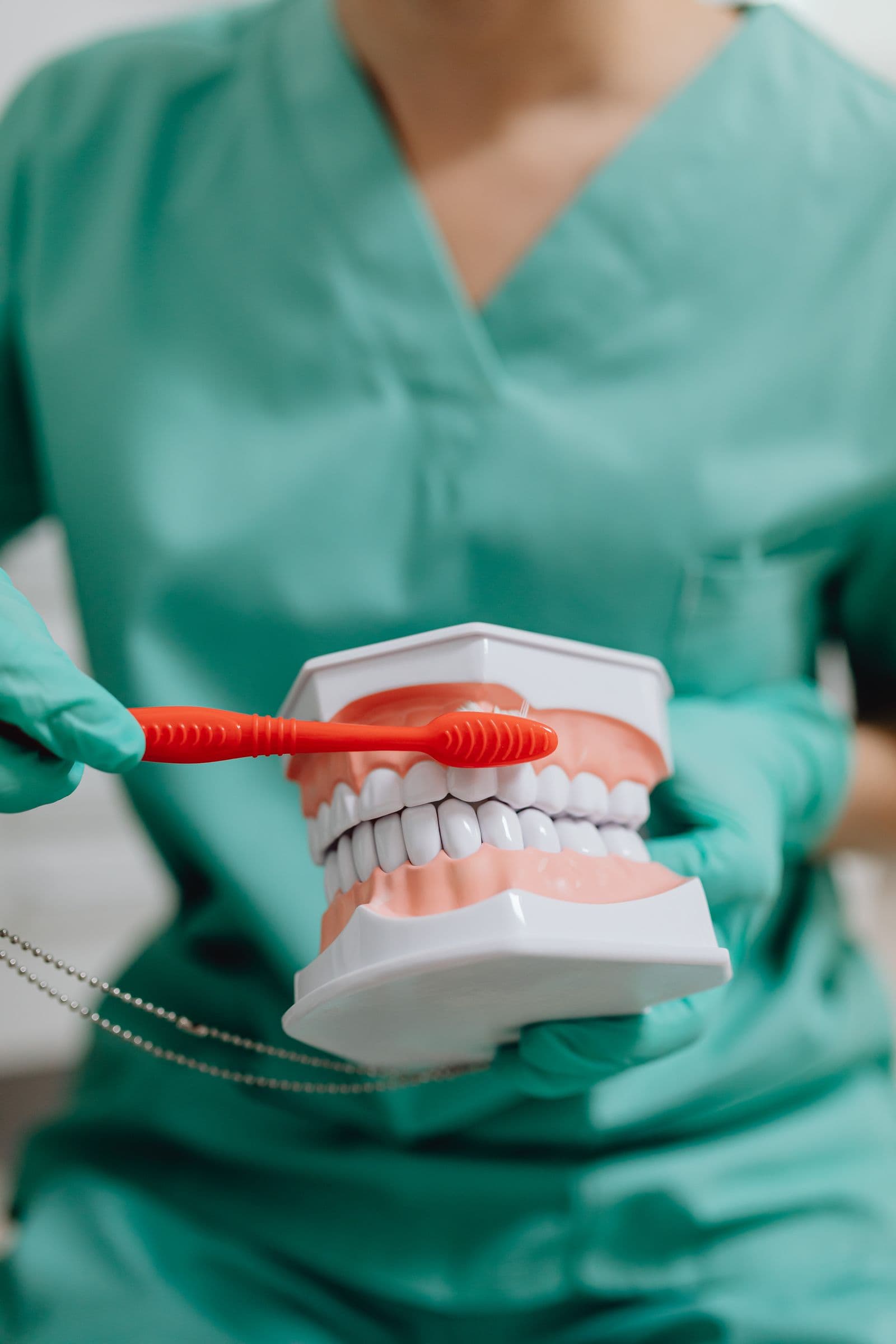
- +Brush gently twice a day with a soft toothbrush and fluoride toothpaste — even if your gums bleed, keep going
- +Clean between your teeth every day with floss or interdental brushes
- +If you smoke, ask us for support to cut down or quit — smoking raises your risk of gum disease
- +Tell us if you have diabetes or take medicines that dry your mouth, as both raise your risk
- +Keep your maintenance visits, even when everything feels fine
- +Ask about payment plans if treatment will run across several visits
Common Questions
Related
Please note: This article offers general information only and cannot replace a periodontal assessment. Your treatment will be shaped by what we find at examination, and fees and outcomes vary between patients.